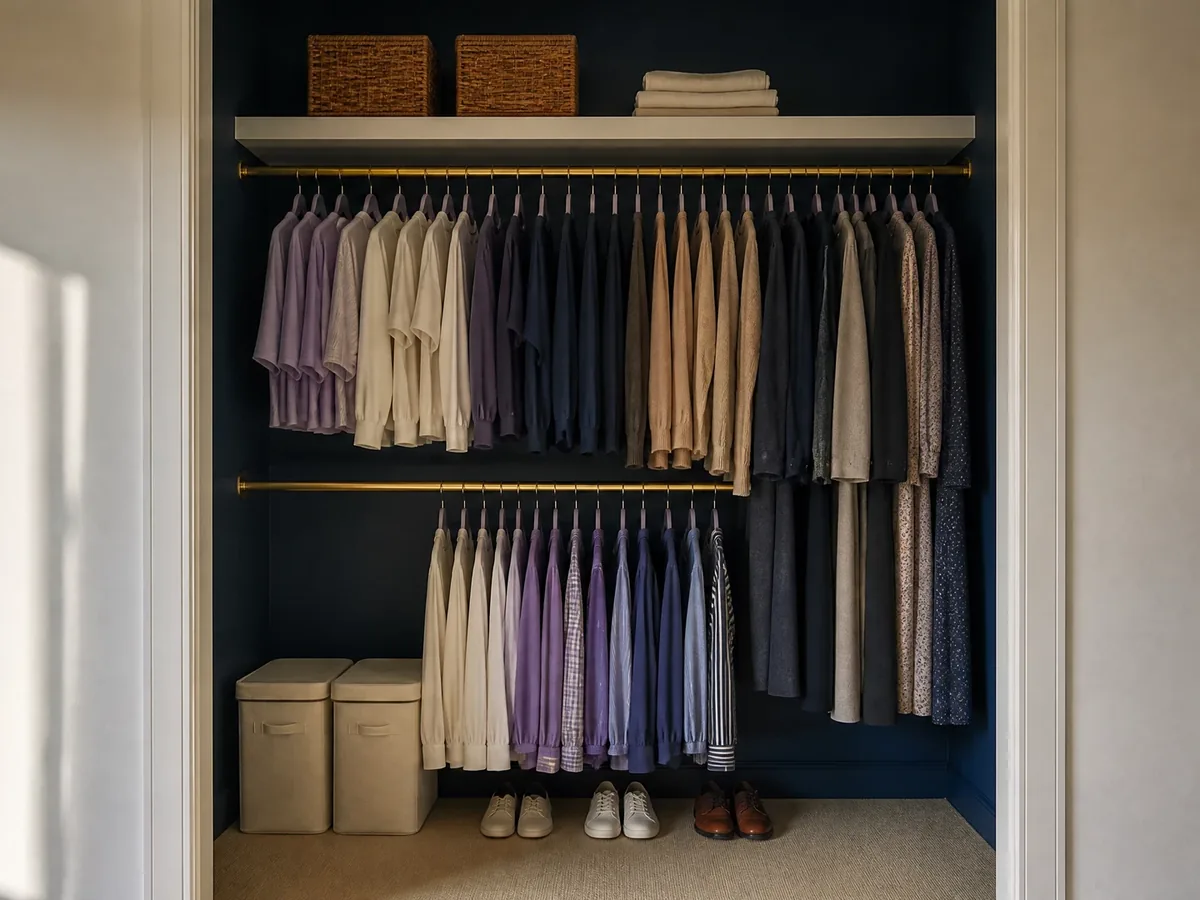
Reach-in closets
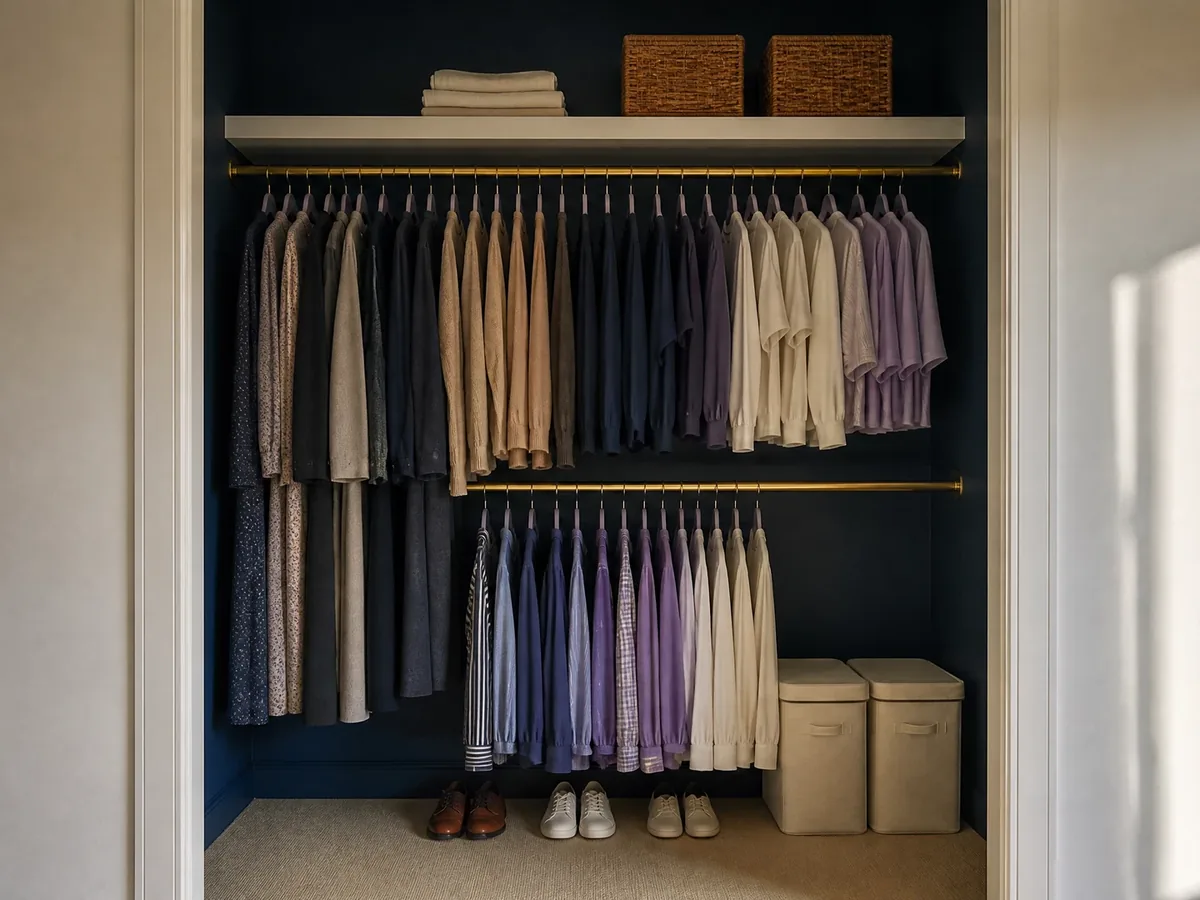
One rod, one shelf, and a door that opens into the foot of the bed. A reach-in is small on purpose, and the trick is spending its height in the right places.
One rod, one shelf, doors that swing out into the room
Open the guideStart here
Five shapes, five different problems. Pick the one you have rather than the one you wish you had.
A closet is not measured in cupboards, it is measured in garments. Pick the thing you own most of and see what it needs — a full drop or half of one — before you decide where anything goes.
Most closet advice is written as if every closet is the same shape. They are not. A walk-in with two usable walls and a reach-in behind a bifold door need completely different plans, and a linen closet is not a wardrobe that lost its rod. Sorting out which type you are standing in front of is the fastest way to stop reading advice that does not apply.
The five pages below cover the shapes that turn up in rented flats and small houses most often. Each one is written around the same three questions: what is this closet good at, what is it bad at, and what is the single change that earns the most room.
Stand in front of it and answer three questions.
The names matter less than the measurements. Width, depth, and the drop from rod to floor are the three numbers that decide what a closet can hold. Everything else is vocabulary.
The single most useful idea on this site is that clothes should be grouped by how long they hang, not by what colour they are. A shirt needs roughly half the drop of a dress. Put all the long things at one end of the rod and all the short things at the other, and the space under the short things becomes usable — for a second rod, for a stack of bins, for shoes.
Colour-coding looks better in photographs and does nothing for capacity. Length-grouping looks slightly odd and doubles what fits.
There is a point where a rented closet has given everything it can. If you own the place, or you have a landlord who will sign off on proper work, the right answer is a measured, built-in system — and that is a different trade from the one this site covers. Two specialists handle it:
Everything on this site is the other kind of answer: undoable, cheap, and safe to do in a flat you do not own.
If the closet is simply full, start with the 30-day declutter plan — it costs nothing and it is the step most people skip. If it is empty but badly arranged, the garment picker above tells you what your clothes actually need. And if the problem is a hole in the wall you are not allowed to make, the no-drill ideas page is the one to read.
Tap a module, then tap a bay to drop it in. Nothing here costs money and nothing needs a drill — the point is to see the trade-off between hanging and folding before you commit a Saturday to it.
Three bays, one closet
Drop a module into a bay
Two bays of short hang, one bay of shelves. The usual starting point.
One page each, same three questions: what it is good at, what it is bad at, what to change first.
One rod, one shelf, and a door that opens into the foot of the bed. A reach-in is small on purpose, and the trick is spending its height in the right places.
One rod, one shelf, doors that swing out into the room
Open the guideA walk-in is not a bigger cupboard. It is a cupboard you can stand inside, which changes what you can store and what should never go in the middle of the floor.
Two or three walls, a doorway, and a floor you can stand on
Open the guideThe closet you can take with you when the lease ends. Three things decide whether it works: depth, door swing, and how far it can fall.
Free-standing, two doors, and a back that is thinner than you think
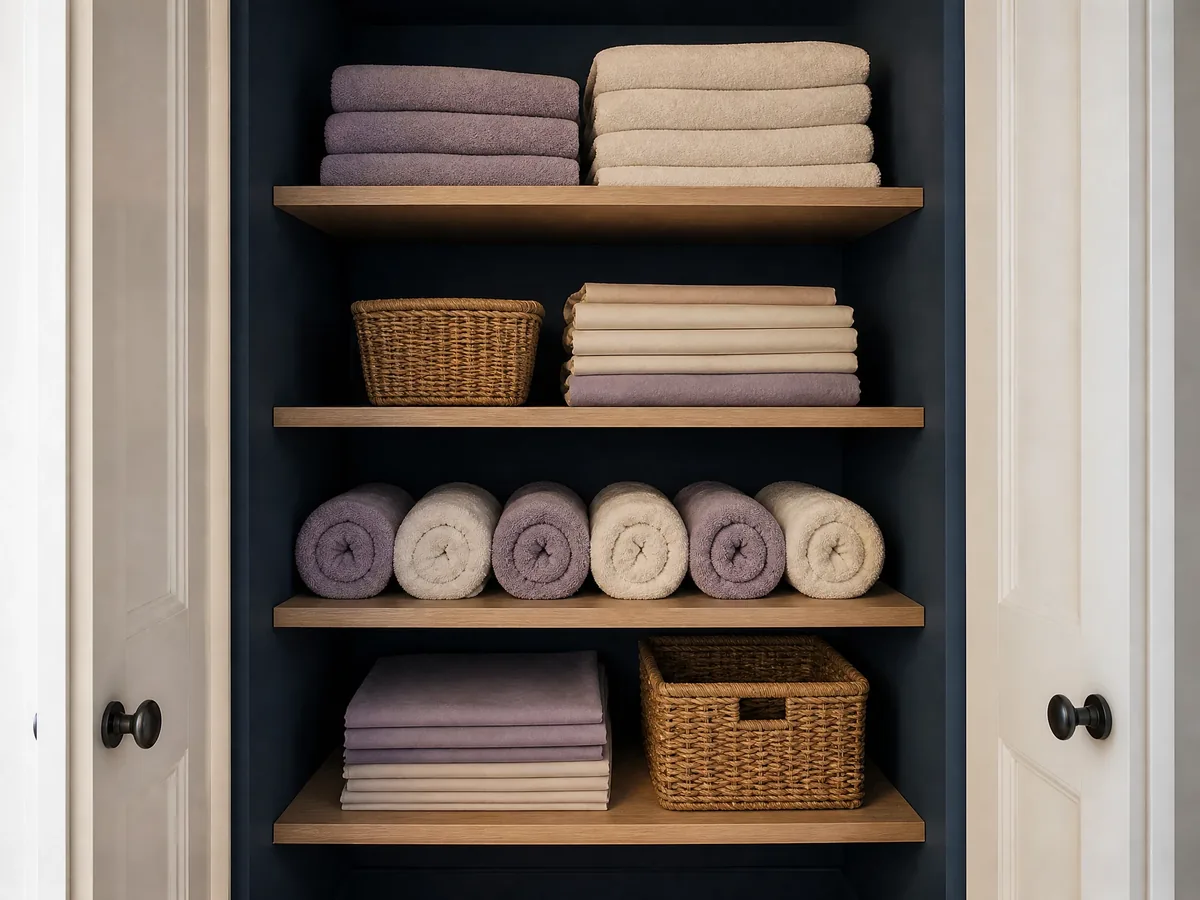
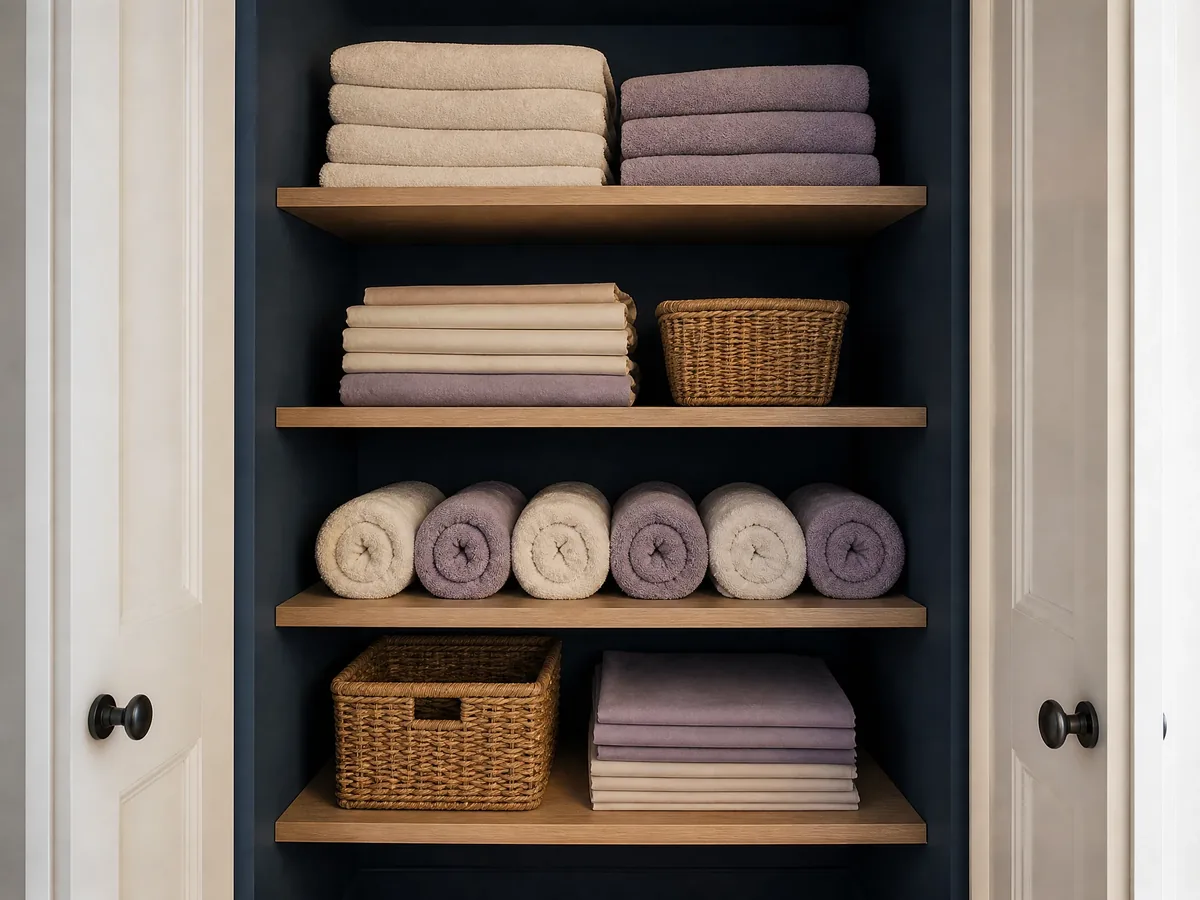
Open the guideA narrow cupboard of flat shelves, and the folding that keeps a stack standing when somebody pulls one towel out of the middle.
Four or five shelves, shallow depth, doors that hide everything
Open the guideThe closet by the front door has one job: getting you out of it in under three minutes. Here is what belongs inside, what does not, and why the floor matters more than the shelf.
Narrow and shallow, right where the front door opens
Open the guide