Owners and long letsTwo-wall runFloor stays clear
Walk-In Closets: When the Room Is the Cupboard
A walk-in is not a bigger cupboard. It is a cupboard you can stand inside, which changes what you can store and what should never go in the middle of the floor.
Two or three walls, a doorway, and a floor you can stand on
Updated 12 November 2026
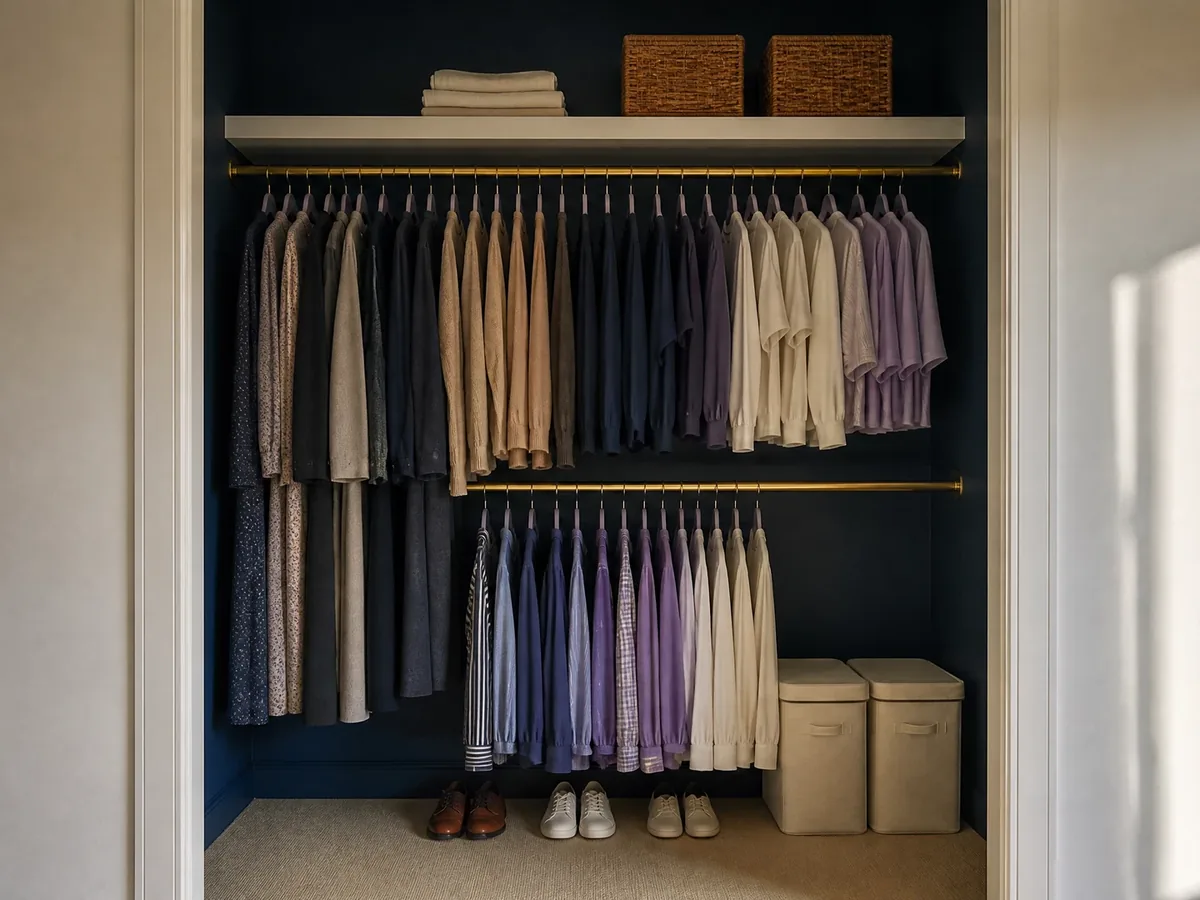
A walk-in closet sounds like the opposite of a rented flat. Most people meet one anyway: a box room with a rail in it, or a cupboard with the door off so you can stand inside.
This is about that version: two long walls, a short one behind the door, a strip of floor.
What makes a walk-in a walk-in
The definition is smaller than the name: two or three walls of storage, a doorway, and enough clear floor to stand on with the door shut. That last part is the whole thing.
The difference between a walk-in and a large reach-in is that you can stand inside it. Nothing more. A deep cupboard you reach into and step back from is still a reach-in. If yours is a cupboard you can turn around in, you have the real thing; the reach-in guide covers the other case.
The wall nobody uses
Every small walk-in has one: the short return behind the door, the wall the door opens against. It sits empty because anything hung there gets hit.
Anything shallower than the open door’s clearance fits.
- Hooks at eye height for a dressing gown or tomorrow’s shirt.
- One shallow shelf above the door head, for twice-a-year boxes.
- A mirror on the back of the door.
- A basket on the floor for laundry, or a rack for weekly shoes.
Hanging does not fit. A hanger is as wide as your shoulders and needs room to swing; the door has booked that space.
Measure the door swing first. An inward door sweeps a quarter circle of floor that decides where the standing strip starts.
Two walls or three
A two-wall run, either an L or two parallel rails, leaves a strip of floor down the middle, and that strip is the point of the room. A three-wall run only works if the third wall is short enough that the ends do not meet.
A full U-shape eats the floor: a corridor of clothes, no light at the back, nowhere to stand while you decide.
Mark the standing strip before anything goes on a wall: a shoulder and a hand wide, from the door to the far wall. A wall that would narrow it stays bare or takes hooks. The closet type guides apply the rule to other shapes.
Lighting
Lighting is the cheapest change with the biggest effect. One borrowed ceiling bulb and clothes on three sides reads as a tunnel, and a tunnel feels smaller than it is. Put light at face height, in front of the clothes.
Battery puck lights, a stick-on rechargeable strip or a clip lamp on the shelf lip all work without a socket.
The catch is adhesive. On a textured or freshly painted ceiling, sticky pads let go in a warm week or take the paint with them on move-out. Stick to smooth walls or an over-door hook. More in no-drill ideas.
An island is usually the wrong first buy
An island needs clear floor on every side to earn its place. In a small walk-in there is one strip, and the island takes it.
A bench does most of the job: sit to tie shoes, rest a bag, fold a jumper, stack the maybe pile. Pick one no deeper than a seat, with legs rather than a solid box.
Keep a basket underneath and nothing else. A declutter plan is a better second buy than more furniture.
Floors and damp
A walk-in with an outside wall collects condensation. In winter, warm air meets the coldest surface in the room, and anything pressed flat against it stays damp.
Keep tall storage off that wall and leave a hand’s gap behind it, so air can move. Shoes go on a rack rather than the floor. A washable runner is fine; a rug pushed against the wall is not.
What done looks like
You walk in, hang a coat on the hook behind the door, and turn around without touching a wall. Both feet fit on clear floor, the light is in front of the clothes, and the short wall carries hooks and a mirror, not a second rail.
That is a finished small walk-in: not a room with a rug and a window seat, just a cupboard you can stand inside. If the flat has no closet, start with wardrobe without a closet.
Walk-in closets: questions
How big does a walk-in closet need to be?
Big enough to stand inside with the door shut and turn around without touching a wall. Two walls of storage plus a clear strip of floor about a shoulder and a hand wide is enough. Anything larger is a small bedroom.
Can you make a walk-in closet in a rented flat?
Only if the flat already has a room or deep cupboard you can use. Tension rods, freestanding rails and adhesive lights do the rest without drilling, though anything fixed to a wall still needs your landlord's agreement.
Why is an island a bad idea in a small walk-in closet?
An island needs clear floor on every side to be usable. In a small walk-in that is the only floor you have, so it turns the room into a corridor. A shallow bench does most of the same job.
What should I put on the wall behind the door?
Hooks at eye height, a mirror on the door itself, one shallow shelf above the door head, and a basket on the floor. Anything deeper than the open door's swing will be hit every time you come in.